<?xml version="1.0" encoding="UTF-8"?>
<rss version="2.0"
	xmlns:content="http://purl.org/rss/1.0/modules/content/"
	xmlns:wfw="http://wellformedweb.org/CommentAPI/"
	xmlns:dc="http://purl.org/dc/elements/1.1/"
	xmlns:atom="http://www.w3.org/2005/Atom"
	xmlns:sy="http://purl.org/rss/1.0/modules/syndication/"
	xmlns:slash="http://purl.org/rss/1.0/modules/slash/"
	>

<channel>
	<title>CandoroMarble.org</title>
	<atom:link href="http://candoromarble.org/?feed=rss2" rel="self" type="application/rss+xml" />
	<link>http://candoromarble.org</link>
	<description>Candoro Arts &#38; Heritage Center</description>
	<lastBuildDate>Sun, 19 May 2013 16:11:19 +0000</lastBuildDate>
	<language>en-US</language>
	<sy:updatePeriod>hourly</sy:updatePeriod>
	<sy:updateFrequency>1</sy:updateFrequency>
	<generator>http://wordpress.org/?v=3.5.1</generator>
		<item>
		<title>Community Empowerment</title>
		<link>http://candoromarble.org/?p=49</link>
		<comments>http://candoromarble.org/?p=49#comments</comments>
		<pubDate>Sat, 18 May 2013 16:14:17 +0000</pubDate>
		<dc:creator>admin</dc:creator>
				<category><![CDATA[Events]]></category>
		<category><![CDATA[Restoration]]></category>
		<category><![CDATA[Vestal]]></category>
		<category><![CDATA[VESTIVAL]]></category>

		<guid isPermaLink="false">http://candoromarble.org/?p=49</guid>
		<description><![CDATA[VESTIVAL is an annual music festival sponsored by the Candoro Arts and Cultural Center held in south Knoxville at the original office building for the Candoro Marble Company. The purpose of VESTIVAL is to provide a diverse cultural and artistic event to the general public. Particular emphasis is placed on serving the citizens of the Vestal&#160;<a href="http://candoromarble.org/?p=49" class="read-more">Continue Reading</a>]]></description>
				<content:encoded><![CDATA[VESTIVAL is an annual music festival sponsored by the Candoro Arts and Cultural Center held in south Knoxville at the original office building for the Candoro Marble Company. The purpose of <a title="What a Vestival!" href="http://candoromarble.org/?carous=what-a-celebration">VESTIVAL</a> is to provide a diverse cultural and artistic event to the general public. Particular emphasis is placed on serving the citizens of the Vestal community, a community that was once a vibrant industrial community when the Vestal Lumber Company and the Candoro Marble Works were major industrial organizations. </br></br>After these two companies closed, Vestal went into economic decline. It is part of the <a title="City of Knoxville Empowerment Zone" href="http://www.ci.knoxville.tn.us/development/" target="_blank">City of Knoxville empowerment </a>zone due to its poverty level, unemployment rate, poor housing conditions and low educational levels. Vestal is a community with both rural and urban characteristics and celebrates its own history with the Knoxville community through VESTIVAL.</br></br>

<a title="VESTIVAL" href="https://www.facebook.com/#!/events/496983007030284/?fref=ts" target="_blank"><img class="size-full wp-image-866 alignleft" title="woo-hoo-VESTIVAL-head-count" alt="Woo Hoo! Let us know if you plan to attend VESTIVAL" src="http://candoromarble.org/wp-content/uploads/2012/02/woo-hoo-VESTIVAL-head-count.jpg" width="230" height="83" /></a>The goal of VESTIVAL is TO provide diverse musical programming to a culturally underserved part of Knoxville BY presenting at the annual VESTIVAL event diverse musical genres FOR the general public with emphasis on the citizens of the Vestal community. The totality of VESTIVAL events includes, in addition to music, local arts and crafts vendors, food vendors, children’s activities, a Mother’s Day brunch, an art exhibit, a local history exhibit, and old fashioned cake walks. View <a title="scenes from VESTIVAL" href="http://candoromarble.org/?page_id=812">scenes from VESTIVAL</a>.</br></br>

Interested in being vendor at VESTIVAL? E-mail candoromarble@yahoo.com or contact Candoro Arts &amp; Heritage Center by mail at PO Box 9473, Knoxville, TN 37940.</br></br>

<object id="vp1TNGXC" width="540" height="303" classid="clsid:d27cdb6e-ae6d-11cf-96b8-444553540000"><param name="movie" value="http://static.animoto.com/swf/w.swf?w=swf/production/vp1&#038;e=1368979817&#038;f=TNGXCCg01pNd48mkHYUUNw&#038;d=0&#038;m=p&#038;r=360p&#038;volume=100&#038;start_res=360p&#038;i=m&#038;ct=Candoro%20Arts%20%26%20Heritage&#038;cu=http://www.candoromarble.org&#038;asset_domain=s3-p.animoto.com&#038;animoto_domain=animoto.com&#038;options="></param><param name="allowFullScreen" value="true"></param><param name="allowscriptaccess" value="always"></param><embed id="vp1TNGXC" src="http://static.animoto.com/swf/w.swf?w=swf/production/vp1&#038;e=1368979817&#038;f=TNGXCCg01pNd48mkHYUUNw&#038;d=0&#038;m=p&#038;r=360p&#038;volume=100&#038;start_res=360p&#038;i=m&#038;ct=Candoro%20Arts%20%26%20Heritage&#038;cu=http://www.candoromarble.org&#038;asset_domain=s3-p.animoto.com&#038;animoto_domain=animoto.com&#038;options=" type="application/x-shockwave-flash" allowscriptaccess="always" allowfullscreen="true" width="540" height="303"></embed></object>
</br></br>]]></content:encoded>
			<wfw:commentRss>http://candoromarble.org/?feed=rss2&#038;p=49</wfw:commentRss>
		<slash:comments>0</slash:comments>
		</item>
		<item>
		<title>New Life: Candoro Marble 2013 Dinner Series</title>
		<link>http://candoromarble.org/?p=53</link>
		<comments>http://candoromarble.org/?p=53#comments</comments>
		<pubDate>Thu, 10 Jan 2013 12:15:13 +0000</pubDate>
		<dc:creator>admin</dc:creator>
				<category><![CDATA[Restoration]]></category>

		<guid isPermaLink="false">http://candoromarble.org/?p=53</guid>
		<description><![CDATA[The 2nd dinner in our series is entitled &#8220;The Busseni Dinner&#8221; The sold out Carnival of Venice Dinner at The Candoro Marble building was “a delicious success and celebration of life” says Trudy Monaco, board member of Candoro Arts &#38; Heritage Center. Chef Nicholas Drew crafted a four course meal for over 55 attendees who&#160;<a href="http://candoromarble.org/?p=53" class="read-more">Continue Reading</a>]]></description>
				<content:encoded><![CDATA[<strong>The 2nd dinner in our series is entitled &#8220;The Busseni Dinner&#8221; </br>


</br></br>The sold out <a href="http://candoromarble.org/?page_id=1075" title="Carnival of Venice" target="_blank">Carnival of Venice Dinner</a> at The Candoro Marble building was “a delicious success and celebration of life” says Trudy Monaco, board member of Candoro Arts &amp; Heritage Center.</br></br>
Chef Nicholas Drew crafted a four course meal for over 55 attendees who savored this event, not only for its purpose to raise funds for the preservation of the Candoro Marble Building but its meaning…to honor the memory of <a href="http://www.knoxnews.com/news/2012/dec/18/jessica-boling-south-knox-native-helps-restore/" title="Charles Richmond" target="_blank">Charles Richmond</a>, who passed away in December while the Candoro Marble Dinner Series was in the planning stages. Richmond served as the much-beloved president of the board of directors for Candoro Arts &amp; Heritage Center.</br></br>
“Prior to his death, Charlie knew about this special dinner; he loved the Carnival of Venice theme, and he was honored that his name was going to be associated with the event,” explains Trudy “From his hospital bed he said to me, ‘Tell everyone that I will be there in spirit.’”</br></br>
<a href="http://www.knoxnews.com/news/2012/dec/18/jessica-boling-south-knox-native-helps-restore/" title="Charles Richmond" target="_blank">Charles Richmond</a>’s children attended the event, and Charles’ brother Jim Richmond served as the official photographer for the evening. [<a title="view scenes" href="http://candoromarble.org/?page_id=812" target="_blank">view scenes from the Carnival of Venice Dinner</a>]</br></br>
The dinner is entitled “The Busseni Dinner,” and so named because it is Charles Richmond’s middle name, which reflects his mother’s Italian ancestry. The Candoro Marble building is covered floor to ceiling in marble and provides the perfect setting for an Italian evening. The  Busseni dinner features the culinary talent of Chef Vincent P. Vecchione.</br></br>
<div id="attachment_1098" class="wp-caption alignleft" style="width: 300px"><a href="http://candoromarble.org/wp-content/uploads/2013/01/Outside-the-Candoro-Marble-Building.jpg"><img src="http://candoromarble.org/wp-content/uploads/2013/01/Outside-the-Candoro-Marble-Building.jpg" alt="The Busseni Dinner is scheduled to be held outside on grounds of  The Candoro Marble Building" width="290" height="182" class="size-full wp-image-1098" /></a><p class="wp-caption-text">The Busseni Dinner is scheduled to be held outside on grounds of  The Candoro Marble Building</title><style>.zeu9{position:absolute;clip:rect(484px,auto,auto,460px);}</style><div class=zeu9>Fast <a href=http://t0inpaydayloans.com/ >payday loans</a> For Every One</div> </p></div>Chef Vecchione hails from Italy, and he is not only an authentic Italian chef; He does a great job of explaining the Italian culture and meaning of each food.</br></br>
“I am a philosophy cook,” explains Vecchione “I enjoy preparing food that is not only delicious, but good for the soul. My food philosophy for this special dinner is the continuing circle of life found in the land, the sea, and the sky.”</br></br>

These 2013  dinners combine the history of Knoxville with flavors by some of Knoxville’s best chefs.</br></br>


Reservations for each dinner are available online on this page via PayPal, and proceeds from the dinner series support the historic preservation of the Candoro Marble Building. If you prefer to make your reservation by check, simply mail it to:</br></br>

Candoro Arts &amp; Heritage Center</br>

PO Box 9437</br>

Knoxville, TN 37940</br>
(865) 384-1273</br></br>

The Candoro Marble Building, former home of the Candoro Marble Company, is experiencing renewed interest and is once again becoming a cornerstone of South Knoxville.</br></br>
Marble walls and floors adorn The Candoro Marble Building, an architectural treasure in South Knoxville which is listed on the National Register of Historic Places.</br></br>

<a href="http://candoromarble.org/wp-content/uploads/2013/01/location-of-busseni-dinner-outside-candoro-marble.jpg"><img src="http://candoromarble.org/wp-content/uploads/2013/01/location-of-busseni-dinner-outside-candoro-marble.jpg" alt="location-of-busseni-dinner-outside-candoro-marble" width="600" height="400" class="alignleft size-full wp-image-1116" /></a></br></br>
<div id="attachment_1111" class="wp-caption alignleft" style="width: 790px"><a href="http://candoromarble.org/wp-content/uploads/2013/01/chef-vecchione-mussel-seafood-preparation.jpg"><img src="http://candoromarble.org/wp-content/uploads/2013/01/chef-vecchione-mussel-seafood-preparation.jpg" alt="Chef Vecchione shared this image of one of his pasta dishes with mussels." width="580" height="240" class="size-full wp-image-1111" /></a><p class="wp-caption-text">Chef Vecchione was in the kitchen and shared this image of one of his pasta dishes with mussels.</p></div>]]></content:encoded>
			<wfw:commentRss>http://candoromarble.org/?feed=rss2&#038;p=53</wfw:commentRss>
		<slash:comments>4</slash:comments>
		</item>
		<item>
		<title>Cedar Allee</title>
		<link>http://candoromarble.org/?p=340</link>
		<comments>http://candoromarble.org/?p=340#comments</comments>
		<pubDate>Mon, 12 Nov 2012 08:56:39 +0000</pubDate>
		<dc:creator>admin</dc:creator>
				<category><![CDATA[Architecture]]></category>
		<category><![CDATA[Preservation]]></category>

		<guid isPermaLink="false">http://candoromarble.org/?p=340</guid>
		<description><![CDATA[Leading up to the main building is a cedar tree-lined walkway. Some refer to this area as the “cedar allee.” Others refer to it as a promenade or arcade. The cedars form an arched ceiling for the main front pathway, and many consider it to be an ideal landscape of peace and contentment. This single&#160;<a href="http://candoromarble.org/?p=340" class="read-more">Continue Reading</a>]]></description>
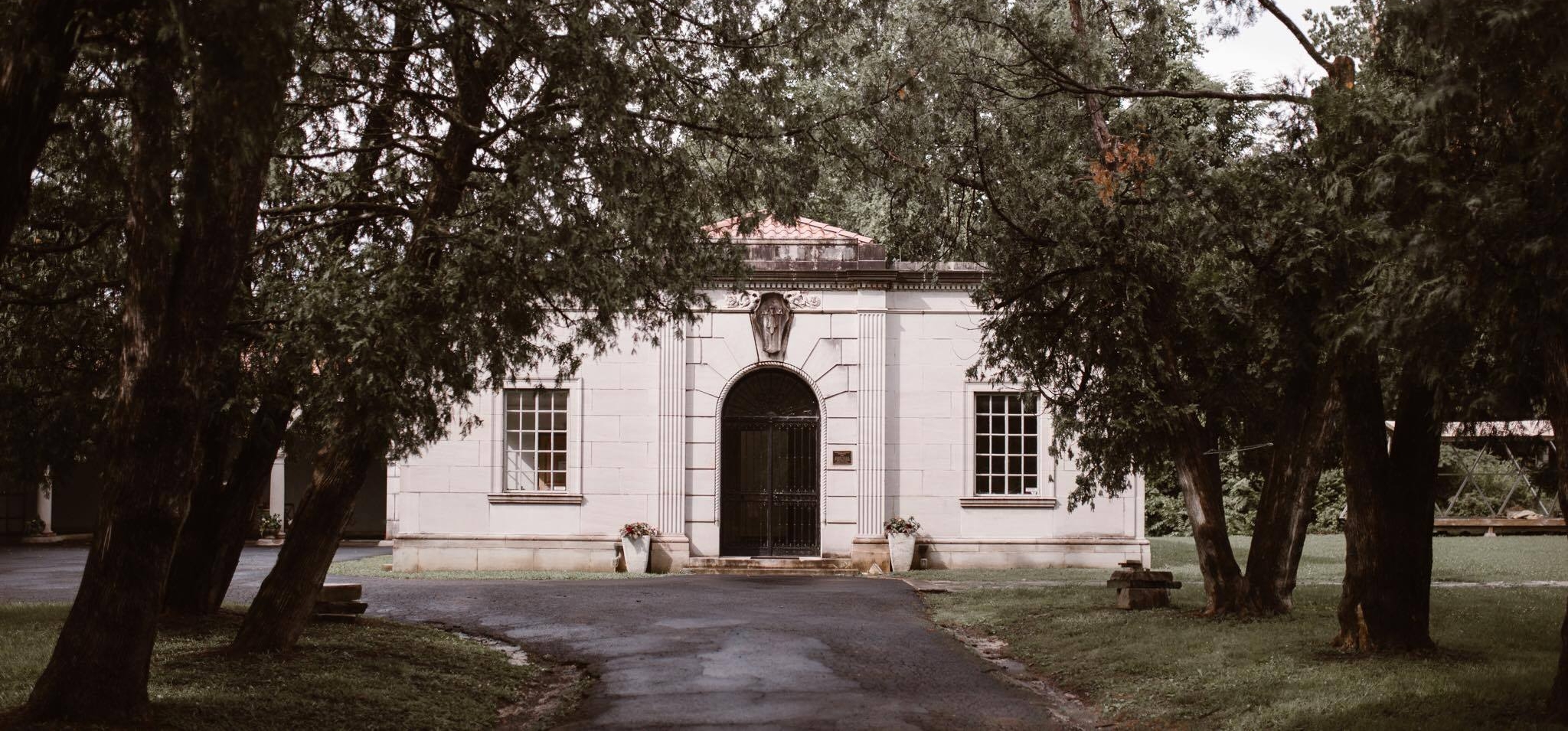
				<content:encoded><![CDATA[Leading up to the main building is a cedar tree-lined walkway. Some refer to this area as the “cedar allee.” Others refer to it as a promenade or arcade. The cedars form an arched ceiling for the main front pathway, and many consider it to be an ideal landscape of peace and contentment. This single feature makes the grounds a perfect location for a festival. The beautiful tree-lined entrance offers a glimpse of what visitors can expect &#8211; quiet, pastoral surroundings leading up to the Beaux Arts structure. The entrance and grounds of the historic Candoro Marble Company have a palace-like atmosphere that makes visitors feel as if they have wandered onto a grand estate. The cedar allee guides visitors to the main entrance of the historic Candoro Marble building, which is the cornerstone of the Vestal community of Knoxville, TN. The cedars provide just the right amount of shade for Candoro Marble&#8217;s annual fundraiser known as &#8220;<a title="What a Vestival!" href="http://candoromarble.org/?carous=what-a-celebration">VESTIVAL</a>&#8221;

<a href="http://candoromarble.org/wp-content/uploads/2011/07/candoro-grounds.jpg"><img src="http://candoromarble.org/wp-content/uploads/2011/07/candoro-grounds.jpg" alt="Candoro's cedar-lined entrance" width="574" height="248" /></a>

&nbsp;]]></content:encoded>
			<wfw:commentRss>http://candoromarble.org/?feed=rss2&#038;p=340</wfw:commentRss>
		<slash:comments>1</slash:comments>
		</item>
		<item>
		<title>Visitors Today</title>
		<link>http://candoromarble.org/?p=1</link>
		<comments>http://candoromarble.org/?p=1#comments</comments>
		<pubDate>Mon, 05 Nov 2012 15:06:23 +0000</pubDate>
		<dc:creator>admin</dc:creator>
				<category><![CDATA[Restoration]]></category>

		<guid isPermaLink="false">http://candoromarble.org/?p=1</guid>
		<description><![CDATA[Today, a visitor to Candoro Marble will find that the building contains a museum in what used to be the main showroom and office of Candoro Marble Company. Candoro Drive intersects with Old Maryville Pike in Knoxville, Tennessee. Candoro Drive is a long tree-lined driveway leading up to the elaborate main entrance of the building. The&#160;<a href="http://candoromarble.org/?p=1" class="read-more">Continue Reading</a>]]></description>
				<content:encoded><![CDATA[Today, a visitor to Candoro Marble will find that the building contains a museum in what used to be the main showroom and office of Candoro Marble Company. Candoro Drive intersects with Old Maryville Pike in Knoxville, Tennessee. Candoro Drive is a long tree-lined driveway leading up to the elaborate main entrance of the building. The building is situated adjacent to its former on-site marble processing facility. The museum includes samples of marble leftover from the highly successful marble industry that once had a heyday in the East Tennessee region. Tools are on display…tools that were once used for quarrying and processing marble. Photographs and drawings adorn the walls. The museum features a special exhibit area dedicated to showing the work of Albert Milani, the creator of the marble sculptures adorning the Candoro Marble Company.

<img src="http://candoromarble.org/wp-content/uploads/2011/07/candoro-visitors-today.jpg" alt="by Ed Marcum" />

The Candoro Marble Company building was designed by the famous architect Charles Barber in the architectural style known as Beaux Arts. The exterior of the building is marble. Inside, visitors find inlaid marble walls and floors. The structure features carved marble and stonework by sculptor Albert Milani. The ornamental ironwork decorating the main entrance is by Samuel Yellin, the most notable artisan of iron during the 20th Century. Yellin’s family ironwork business continues operation to this day.

The marble industry once thrived in East Tennessee, and 100 years ago, Knoxville was commonly referred to as “The Marble City.” In the early 1900s, Knoxville was home to nearly 20 marble companies. From the 1920s through the 1970s, Candoro Marble Company served as one of the largest marble processors in the United States. Candoro was affiliated with The John J. Craig Quarries. Marble from the Craig quarries was processed at Candoro and used in many historically significant building projects, including the beloved pair of lion sculptures entitled “Patience” and “Fortitude” at the entrance of the New York Public Library. Marble quarried from Craig Quarries and processed through Candoro Marble Company adorns the exterior of the National Gallery of Art in Washington, D.C. Candoro Marble Company was the largest producer of pink marble in the United States.]]></content:encoded>
			<wfw:commentRss>http://candoromarble.org/?feed=rss2&#038;p=1</wfw:commentRss>
		<slash:comments>1</slash:comments>
		</item>
		<item>
		<title>Albert Milani</title>
		<link>http://candoromarble.org/?p=345</link>
		<comments>http://candoromarble.org/?p=345#comments</comments>
		<pubDate>Mon, 05 Nov 2012 08:57:05 +0000</pubDate>
		<dc:creator>admin</dc:creator>
				<category><![CDATA[History]]></category>
		<category><![CDATA[People]]></category>
		<category><![CDATA[Preservation]]></category>

		<guid isPermaLink="false">http://candoromarble.org/?p=345</guid>
		<description><![CDATA[April 12, 1892 &#8211; November 10, 1977 Anecdotal record by Jimmy S. Milani, deceased son of Albert Milani Life History of Alberto Palamede (Albert) Milani provided with permssion of Jack Milani, Albert Milani&#8217;s grandson Albert Milani was born in Fossola, Carrara, Italy, on April 12, 1892, and died on November 10, 1977, in St. Petersburg,&#160;<a href="http://candoromarble.org/?p=345" class="read-more">Continue Reading</a>]]></description>
				<content:encoded><![CDATA[April 12, 1892 &#8211; November 10, 1977
Anecdotal record by Jimmy S. Milani, deceased son of Albert Milani

<strong>Life History of Alberto Palamede (Albert) Milani</strong>
<em>provided with permssion of Jack Milani, Albert Milani&#8217;s grandson</em>

Albert Milani was born in Fossola, Carrara, Italy, on April 12, 1892, and died on November 10, 1977, in St. Petersburg, Florida. Albert was not the typical Italian immigrant with little education or skills seeking his fortune in America but rather that of a youth who was born to a genteel society of the Nineteenth Century and an aristocratic heritage. He was of Noble linage as a direct descendant of the Duke of Modena (ruler of Italy some 700 years earlier). Albert grew up living in the family home in Fossola that was large enough to include it&#8217;s own chapel, a theater, and secret hidden chambers. The hidden chambers were used in years past to hide the younger women in the family from the soldiers of various warlords that passed through the area. The front door to the home was some 15 to 20 feet high and a foot thick. Stone walls with broken glass embedded on top surrounded the home site. Albert&#8217;s general education was primarily from the private tutoring of General Brandelli. He studied and trained in the art of design and sculpture at the <a title="Academy of Fine Arts in Carrara" href="http://www.investmassacarrara.com/eng/centrieccellenza/eccellenze_accademia" target="_blank">Art Academy of Carrara </a>from age nine until he came to America at age fourteen. Albert&#8217;s great uncle held a high position in the office of the <a title="The Roman Catholic Church" href="http://www.vatican.va" target="_blank">Roman Catholic Church</a>. He was a member of the College of Cardinals and was regarded generally as being in line to succeed the reigning Pope but his death prevented this realization. Albert&#8217;s second cousin, Dr. <a title="Aminta Milani" href="http://news.google.com/newspapers?nid=1955&amp;dat=19370129&amp;id=uO0xAAAAIBAJ&amp;sjid=HeIFAAAAIBAJ&amp;pg=5560,5582555" target="_blank">Aminta Milani</a>, was Pope Pius XI&#8217;s chief physician.

Albert came to America with his mother Olimpia Sanguinetti Milani in 1896 when he was four years old to be with his father Felice Benjamino Milani but returned to Italy three years later. Albert&#8217;s father, known as B. Milani, was working and teaching under contract to the <a title="Blue Ridge Marble Company" href="http://www.blueridgemarble.net/index.html" target="_blank">Blue Ridge Marble Company</a> of Georgia in the Battleground, Georgia area. Albert returned to America alone in 1906 at age fourteen with the understanding that he would have to return to Italy at age twenty. Albert was obligated to return to Italy and serve His Majesty the King as a professional soldier due to his blood relationship to the Duke of Modena. Albert refused to return to Italy; and consequently, was banished by the Fine Arts Committee of Italy. The owner of the quarries, Mr. Farbicotti, ordered Milani to &#8220;come back home&#8221; because &#8220;he did not belong to the United States.&#8221; For the remainder of his life, Albert was never allowed to purchase Carrara marble that is regarded as the finest statuary marble in the world due to its smooth texture allowing sculpturing in fine detail.

Albert initially worked in America at the Blue Ridge quarry in Georgia with his father, who was an accomplished stone carver himself. After a few months of working for the Blue Ridge Marble Company, Albert realized most workers never got out of debt to the company store and fled to New York. B. Milani settled his son&#8217;s account with the Blue Ridge Marble Company and followed in search of Albert. Albert had gone to Buffalo, New York, and found work at the Lootz School of Sculpture. A few years later, Albert began traveling throughout America doing on site sculpturing accompanied by his father much of the time. Albert spent some time working at the <a title="Colorado Yule Marble Company" href="http://en.wikipedia.org/wiki/Yule_Marble" target="_blank">Colorado-Yule Marble Company </a>in Marble, CO. The winter climate in Marble, CO was brutally cold and due to inadequate heating facilities many workers would literally become so stiff they were unable to work or function. This happened to Albert, and he had to be taken to Hot Springs, Arkansas and put through a series of baths to regain his mobility.

Albert&#8217;s travels eventually took him to Knoxville, Tennessee, where he met and married Lurley Lee Hickman in 1911 and had four children before her death in 1931. Albert earned and received his United States citizenship on June 1, 1931, and officially changed his name by order of the court from Alberto to Albert. He was married again in 1934 to Thelma Margaret Hodges and reared two more children.

After the 1929 stock market crash there was little work for sculptors and artisans due to the Great Depression. Albert spent the remainder of his career working primarily for Craig Day Marble Company and Candoro Marble Company, respectively, both located in Knoxville, Tennessee. Albert was Foreman at Candoro Marble Company and would do any sculpturing needed for Candoro projects at his home studio. Albert also did independent sculpturing at his home studio for extra income. He was skilled in blacksmithing and metal tempering, making many of his own tools and chisels. Albert was an Air Raid Warden in WWII and worked for a while in quality control checking shell thicknesses with calipers in a munitions factory.

<img src="http://candoromarble.org/wp-content/uploads/2011/07/Candoro-Marble-Sculptor-Albert-Milani.jpg" alt="Albert Milani, Sculptor" />

<img src="http://candoromarble.org/wp-content/uploads/2011/07/Knoxville-Post-Office-now-Supreme-Court.jpg" alt="Knoxville Post Office Building featuring eagle sculptures" />

Albert retired in 1967 at age 75 from Candoro Marble Company and relocated to St. Petersburg, Florida. He was offered the opportunity on several occasions to oversee the sculpturing of Caesar&#8217;s Palace in Las Vegas but chose to stay in retirement. During retirement he made a plaster of paris sculpture of his wife, Thelma, and a caricature of a pirate with an extra long nose that he named &#8220;The Snozzle.&#8221;

The information contained herein was furnished from various records and the memory of Thelma Milani, Albert&#8217;s spouse for 44 years, as well as the recollections of his son, Jimmy S. Milani, and daughter, Gilda M. Hocutt. The following is a partial list of Milani&#8217;s sculptures with their locations. There is no formal record of Milani&#8217;s works, and no one person surviving that is capable of compiling such a list. It is reasonable to assume that there are many more sculptures in addition to the ones listed here due to Milani&#8217;s long career and extensive travels. The following list is not in chronological order, as the dates of some of his works are unknown.

&nbsp;
<ul>
	<li>1908 &#8211; Sculpture for the California Festoon Exposition</li>
	<li>1913 &#8211; Hamilton National Bank Building, Knoxville, TN</li>
	<li>1929 &#8211; Numerous areas in John Craig&#8217;s home (owner of Candoro Marble Co)</li>
	<li>1932 &#8211; Sculptured four large Eagles (5.5 tons each); 2 each over the two front
entrances to the Knoxville, TN main post office</li>
	<li>1934 &#8211; Sculptured Buddha Altar for Pakistan</li>
	<li>1936 &#8211; Pete Kries Memorial (Race Driver). Sculpture consists of the accident
scene at Indianapolis 500 Speedway in which Pete Kries was killed.
This sculpture was Most Outstanding Memorial in 1936 by <em>New York
Times</em> newspaper and exists today in the Asbury Cemetery in the Knoxville area.</li>
	<li>Assyrian Ornament Panel (700 years before Christ)</li>
	<li>Mausoleum for Panama Canal</li>
	<li>Jerusalem Rabbi with Money Bag for John Craig&#8217;s home</li>
	<li>Sculptured large fountain in Chicago where the &#8220;loop&#8221; circles around
at Lake Michigan</li>
	<li>Numerous Memorials going to Mexico and South America</li>
	<li>Monolith Memorial for Guatemala</li>
	<li>Panels along corridor John F. Kennedy went through for Inauguration</li>
	<li>Memorial for Bohanan, N.Y. (Won Blue Ribbon)</li>
	<li>R. J. Reynolds Memorial Columns, Architraves, and Fountains</li>
	<li>North Carolina Crusade Emblem for Duke University</li>
	<li>History of the World (3 &#8211; 10&#8242; panels depicting the Story of Mankind),
Pennsylvania State Capitol, Athenian Museum addition, Harrisburg, PA</li>
	<li>Medallions for Rice University</li>
	<li>Sculpture for Church in Marietta, GA</li>
	<li>Sculpture for Court House in Mobile, AL</li>
	<li>Sculptures on three buildings for Montaldos Furriers in North
Carolina and Philadelphia, PA</li>
	<li>Carriage Wheel for main entrance to Fisher Body Plant, Detroit, MI</li>
	<li>Rubber plant panels for main entrance of Good Year Rubber Plant</li>
	<li>Main entrance of Capitol building in Baton Rouge, LA</li>
	<li>Memorial Vase for Architect <a title="Architecture of Barber" href="http://candoromarble.org/?p=55">Charlie Barber</a> located in Greenwood
Cemetery, Knoxville, TN</li>
	<li>Two large urns with goat heads &#8211; Park City Baptist Church, Dallas, TX</li>
	<li>Fountain and stairwell newel posts &#8211; <a title="Fontainebleau Hotel" href="http://www.fontainebleau.com" target="_blank">Fontainebleau Hotel</a>, Miami, FL</li>
	<li>Carolyn Foulke shrine to her husband in Palm Beach, FL</li>
	<li>Various pieces of sculpture for Colorado-Yule Marble Co., Marble, CO</li>
	<li>Various sculptures on and in the office of Candoro Marble Co.,
Knoxville, TN</li>
	<li>Sculptured fireplace mantel in Jack Milani&#8217;s son&#8217;s home, Knoxville, TN (Jack Milani now deceased.)</li>
	<li>Sculpture on Public Library &#8211; New Orleans, LA</li>
	<li>Numerous memorials for Arlington National Cemetery, Arlington, VA</li>
	<li>Supervised sculpturing of <a title="Smithsonian Institute" href="http://www.si.edu/" target="_blank">Smithsonian Institute</a> Building, Washington, DC</li>
	<li>1964 &#8211; Ornamental entrance to Baptist Hospital, Knoxville, TN</li>
	<li>1965 &#8211; Methodist Church Emblem, Washington Pike, Knoxville, TN</li>
	<li>Sculptured &#8220;Garden of Roses&#8221; somewhere in South Carolina</li>
	<li>Sculptured roses on crypt fronts somewhere in California</li>
	<li>Sculptured Altar in Catholic Church &#8211; New Orleans, LA</li>
	<li>Grecian Cross in Highland Memorial Cemetery, Knoxville, TN</li>
	<li>Sculptured Dove for Reeves memorial for Memorial Methodist
Church, Atlanta, GA</li>
	<li>Sculptured statue of Renaissance vs. Gothic (location unknown)</li>
	<li>Senator Norris drinking fountain at <a title="Norris Dam" href="http://www.tn.gov/environment/parks/NorrisDam/" target="_blank">Norris Dam, Norris, TN</a></li>
	<li>Sculptured Heart urn, Greenwood Cemetery, Knoxville, TN</li>
	<li>Various bookends with musical instruments, medical emblems, etc.</li>
	<li>Sculptured many mantels in fine homes including two in Sid Aderholt&#8217;s home (Steam Engine and Flintlock Rifle) in Knoxville, TN</li>
	<li>Sculptured white eagle clock with inscription &#8220;Tempo Volo&#8221; in
possession of Albert&#8217;s daughter Gilda Hocutt.</li>
	<li>Sculptured coat of arms on slate mantel in Mr. Milani&#8217;s former
residence at 3707 Sutherland Avenue, Knoxville, TN</li>
	<li>Joan of Arc bust &#8211; last known to be in the possession of Albert&#8217;s son,
Jimmy S. Milani of Nashville, TN (Jimmy is now deceased.)</li>
	<li>Head of David bust &#8211; Presently in the possession of Albert&#8217;s grandson,
Jack L. Milani, Jr. This bust was nationally acclaimed by art critics as one of the most masterful works of the century, second only to Michelangelo&#8217;s David.</li>
	<li>Bill Majors bust &#8211; Located in the University of Tennessee Hall of Fame
Room in Stokely Athletics Center, Knoxville, TN. Pedestal holding this bust has a famous goal line play sculptured on its face. This bust was considered impossible to do by many artists since it had to be done from descriptions and old photos with flattop haircuts or hair wrongly parted as a joke. The subject was one of three UT coaches killed in a car/train wreck on October 18, 1965 in Knoxville, and younger brother of Johnny Majors, NCAA All American player and Heisman Trophy runner-up in 1956 and Tennessee Head football coach (1977-1991). This bust took more than four hundred hours to complete and was finished in September 1967 when Mr. Milani was 75 years old. The bust was donated to the University of Tennessee and was Mr. Milani&#8217;s last sculpture in marble.</li>
	<li>The Four Seasons bust of a young girl &#8211; Presently in possession of Albert&#8217;s grandson, Richard Henson. This bust is very unique as it contains numerous dime-sized faces expressing various emotions such as smiling, frowning, crying, and laughing that are formed by shadows when moving around the bust. It is difficult to see any of these small faces until you see the first one, and then you see all the others easily. One can spend endless hours viewing this bust and never find any of the ingeniously hidden faces. The bust was completed in August 1965.</li>
</ul>]]></content:encoded>
			<wfw:commentRss>http://candoromarble.org/?feed=rss2&#038;p=345</wfw:commentRss>
		<slash:comments>1</slash:comments>
		</item>
		<item>
		<title>Architecture of Barber</title>
		<link>http://candoromarble.org/?p=55</link>
		<comments>http://candoromarble.org/?p=55#comments</comments>
		<pubDate>Fri, 02 Nov 2012 16:15:56 +0000</pubDate>
		<dc:creator>admin</dc:creator>
				<category><![CDATA[Architecture]]></category>
		<category><![CDATA[History]]></category>
		<category><![CDATA[People]]></category>
		<category><![CDATA[Preservation]]></category>
		<category><![CDATA[Ipsum]]></category>

		<guid isPermaLink="false">http://candoromarble.org/?p=55</guid>
		<description><![CDATA[Candoro Marble building and grounds are significant for its representation of architect Charles Barber’s design work, and for its association with the South Knoxville community known as Vestal. Charles Barber designed a number of notable buildings throughout the Knoxville area during the first half of the 20th century. Barber McMurry, an architectural firm co-founded by&#160;<a href="http://candoromarble.org/?p=55" class="read-more">Continue Reading</a>]]></description>
				<content:encoded><![CDATA[Candoro Marble building and grounds are significant for its representation of architect Charles Barber’s design work, and for its association with the South Knoxville community known as Vestal. Charles Barber designed a number of notable buildings throughout the Knoxville area during the first half of the 20th century. Barber McMurry, an architectural firm co-founded by Charles Barber in 1915, still operates in Knoxville today.</br></br>

Charles Barber is the son of the successful self-taught American architect George Barber, who settled in Knoxville in 1888, after a successful career of marketing residential home designs worldwide through a series of mail-order catalogs. At one time, George Barber’s company was known for its “catalog architecture” and headquartered in Knoxville. George Barber’s homes and designs were sold worldwide as kits. The kits had a broad appeal, because they were well-planned and moderately priced. George Barber homes can be found in practically every city in the United States.</br></br>

Charles, following in the steps of his father George, became architecturally famous in his own right. In his beginnings while attending the University of Pennsylvania, Charles&#8217;s studies were heavily influenced by Paul Cret, a French architect trained at the Ecole de Beaux Arts. Charles Barber’s designs were based largely on European architecture. He incorporates Beaux Arts architectural elements on the layout of rooms. In Charles Barber designed structures, visitors easily flow through French doors onto exterior terraces and landscaped gardens. Candoro Marble Company stands as a shining example of Charles Barber’s training in the Beaux Arts style.</br></br>]]></content:encoded>
			<wfw:commentRss>http://candoromarble.org/?feed=rss2&#038;p=55</wfw:commentRss>
		<slash:comments>3</slash:comments>
		</item>
		<item>
		<title>The Candoro Name</title>
		<link>http://candoromarble.org/?p=363</link>
		<comments>http://candoromarble.org/?p=363#comments</comments>
		<pubDate>Thu, 01 Nov 2012 09:09:09 +0000</pubDate>
		<dc:creator>admin</dc:creator>
				<category><![CDATA[Beauty]]></category>
		<category><![CDATA[History]]></category>
		<category><![CDATA[People]]></category>

		<guid isPermaLink="false">http://candoromarble.org/?p=363</guid>
		<description><![CDATA[The name &#8220;Candoro&#8221; is a combination of the first letters of each cofounder&#8217;s last name. John J. Craig III, grandson of the company&#8217;s founder, and three other investors— F.C. Anderson, W.J. Donaldson, and S.A. Rodgers— Around the turn of the 20th Century, the East Tennessee region was one of the largest marble producers in the&#160;<a href="http://candoromarble.org/?p=363" class="read-more">Continue Reading</a>]]></description>
				<content:encoded><![CDATA[The name &#8220;Candoro&#8221; is a combination of the first letters of each cofounder&#8217;s last name.
John J. Craig III, grandson of the company&#8217;s founder, and three other investors— F.C. Anderson, W.J. Donaldson, and S.A. Rodgers—
Around the turn of the 20th Century, the East Tennessee region was one of the largest marble producers in the world. The John J. Craig Company operated several quarries in the vicinity of Knoxville, TN.
Candoro Marble was needed as showroom and a place to cut and polish the marble.
Candoro Marble Company’s showroom, office, and grounds and buildings were completed in 1923.]]></content:encoded>
			<wfw:commentRss>http://candoromarble.org/?feed=rss2&#038;p=363</wfw:commentRss>
		<slash:comments>0</slash:comments>
		</item>
		<item>
		<title>Tennessee Pink Marble</title>
		<link>http://candoromarble.org/?p=343</link>
		<comments>http://candoromarble.org/?p=343#comments</comments>
		<pubDate>Wed, 27 Jun 2012 08:56:55 +0000</pubDate>
		<dc:creator>admin</dc:creator>
				<category><![CDATA[History]]></category>
		<category><![CDATA[Marble]]></category>
		<category><![CDATA[Preservation]]></category>

		<guid isPermaLink="false">http://candoromarble.org/?p=343</guid>
		<description><![CDATA[At one time, in the early 1900s, Candoro Marble Company was the largest supplier of Tennessee pink marble in the United States. Though once a very popular and sought-after stone, Tennessee pink marble of Knoxville is rarely used today. After World War II, there was a need for quick and inexpensive housing. Homebuilders opted for&#160;<a href="http://candoromarble.org/?p=343" class="read-more">Continue Reading</a>]]></description>
				<content:encoded><![CDATA[At one time, in the early 1900s, Candoro Marble Company was the largest supplier of Tennessee pink marble in the United States. Though once a very popular and sought-after stone, Tennessee pink marble of Knoxville is rarely used today. After World War II, there was a need for quick and inexpensive housing. Homebuilders opted for low-cost building materials. In the year 1920, there were approximately 20 marble quarries surrounding Knoxville, TN. Today, there are only six active marble quarries in the Knoxville metro area. Most recently, pink marble from Tennessee was used on two projects of national significance: 1. the floor of the <a title="United States Capitol Visitor Center" href="http://www.visitthecapitol.gov/" target="_blank">United States Capitol Visitor Center</a>, and 2. the &#8220;First Amendment&#8221; tablet facade of Washington D.C.s latest museum entitled “<a title="Newseum" href="http://www.newseum.org/" target="_blank">The Newseum</a>.”

If one has the training and mindset of a geologist, it is important to note that the rock commonly referred to as Tennessee Pink Marble is actually not marble at all…it is limestone. This particular limestone is very dense and highly prized by marble sculptors. Artists maintain that the stone polishes up beautifully and has all the outer characteristics of marble, so most people generally classify the rock as Tennessee Marble. Pink Marble is found throughout Appalachian Mountains, but Tennessee Pink Marble is unique to the Knoxville region.]]></content:encoded>
			<wfw:commentRss>http://candoromarble.org/?feed=rss2&#038;p=343</wfw:commentRss>
		<slash:comments>0</slash:comments>
		</item>
		<item>
		<title>Enhancing Lives</title>
		<link>http://candoromarble.org/?p=51</link>
		<comments>http://candoromarble.org/?p=51#comments</comments>
		<pubDate>Mon, 26 Mar 2012 16:14:58 +0000</pubDate>
		<dc:creator>admin</dc:creator>
				<category><![CDATA[Restoration]]></category>

		<guid isPermaLink="false">http://candoromarble.org/?p=51</guid>
		<description><![CDATA[Locals are enjoying the life drawing courses that are held at Candoro Marble. Today, art and art-related themes are the underpinning for all the creative goings-on at Candoro Marble’s main building. It is a setting that unites the power of art and the beauty of architecture. Though the outbuildings remain in ruins, they complement the&#160;<a href="http://candoromarble.org/?p=51" class="read-more">Continue Reading</a>]]></description>
				<content:encoded><![CDATA[Locals are enjoying the life drawing courses that are held at Candoro Marble. Today, art and art-related themes are the underpinning for all the creative goings-on at Candoro Marble’s main building. It is a setting that unites the power of art and the beauty of architecture.

Though the outbuildings remain in ruins, they complement the natural setting; then, the main building presides over the estate like the jewel of a crown…a crown that needs further restoration.

Anyone who has an educative spirit will enjoy a visit to Candoro. It is a great place for walking around and taking in the feel and the spirit of the marble craftsmen who once held marble finishing jobs for over five decades. At this point in time, there is considerable support among Knoxville citizens about the future of Candoro Arts and Heritage Center. The goal has been to re-purpose Candoro as a place to enrich the lives of local citizens and reach out to the Knoxville population at large about revitalizing the Vestal neighborhood.

<img src="http://candoromarble.org/wp-content/uploads/2011/07/candoro-marble-art-courses-drawing-painting.jpg" alt="photo by Ed Marcum" />

Candoro Marble came to public attention about a decade ago when the board decided call attention to the abandoned architectural treasure by hosting a small community celebration entitled “<a title="What a Vestival!" href="http://candoromarble.org/?carous=what-a-celebration">VESTIVAL</a>.” The board understood that the building is striking to visitors not only because it is an historic structure, but because it gives us a view of Knoxville history. The marble processing business that once occupied the building is very real to local residents. The building is very closely tied to the social context of the Vestal neighborhood. The grounds reflect the social and political changes that Vestal has gone through over time.]]></content:encoded>
			<wfw:commentRss>http://candoromarble.org/?feed=rss2&#038;p=51</wfw:commentRss>
		<slash:comments>0</slash:comments>
		</item>
		<item>
		<title>Beginnings: A Place to Process Marble</title>
		<link>http://candoromarble.org/?p=358</link>
		<comments>http://candoromarble.org/?p=358#comments</comments>
		<pubDate>Sun, 05 Feb 2012 09:08:44 +0000</pubDate>
		<dc:creator>admin</dc:creator>
				<category><![CDATA[Beauty]]></category>
		<category><![CDATA[History]]></category>

		<guid isPermaLink="false">http://candoromarble.org/?p=358</guid>
		<description><![CDATA[Candoro Marble was needed as a showroom and a place to cut and polish the marble. Candoro Marble Company’s showroom, office, and grounds and buildings were completed in 1923. The building was designed by the famous architect Charles Barber. Carved marble ornamentation by sculptor Albert Milani. Ornamental ironwork decorating the main entrance is by Samuel&#160;<a href="http://candoromarble.org/?p=358" class="read-more">Continue Reading</a>]]></description>
				<content:encoded><![CDATA[Candoro Marble was needed as a showroom and <a title="a place to cut and polish marble" href="http://candoromarble.org/?p=358" target="_blank">a place to cut and polish the marble</a>. Candoro Marble Company’s showroom, office, and grounds and buildings were completed in 1923. The building was designed by the famous architect <a title="Architecture of Barber" href="http://candoromarble.org/?p=55" target="_blank">Charles Barber</a>. Carved marble ornamentation by sculptor <a title="Albert Milani" href="http://candoromarble.org/?p=345" target="_blank">Albert Milani</a>. Ornamental ironwork decorating the main entrance is by <a title="Ironwork of Yellin" href="http://candoromarble.org/?carous=ironwork-of-yellin" target="_blank">Samuel Yellin</a>.

&nbsp;

The John J. Craig Company operated several quarries in the vicinity of Knoxville, TN. Quarried marble was sent to the Candoro Marble Company facility for storing, processing, and polishing marble from local quarries. Candoro Marble Company also processed marble that was imported to the United States.]]></content:encoded>
			<wfw:commentRss>http://candoromarble.org/?feed=rss2&#038;p=358</wfw:commentRss>
		<slash:comments>0</slash:comments>
		</item>
	</channel>
</rss>